
Strange rooms and long hallways can leave you unsure what to do if something goes wrong. These hotel safety tips for travelers start with fire: ask about alarms and sprinklers, know your two nearest exits, and skip the elevator.
You can find more planning advice in these hotel travel tips.
| Item | Value |
|---|---|
| Estimated hotel and motel fires reported to U.S. fire departments each year | 3,900 fires |
| Deaths from those fires each year | 15 deaths |
| Injuries from those fires each year | 150 injuries |
| Property loss from those fires each year | $76 million |
| Exits to locate near your room | The two nearest exits |
| Properties that must have an automatic fire sprinkler system | Four stories or higher |
These figures come from the U.S. Fire Administration bulletin of June 28, 2012. Figures can change, so check the source before you rely on them.
Plan ahead before you book
Fire safety starts at the reservation stage. The U.S. Fire Administration (USFA) advises that you ask whether the hotel has smoke alarms and an automatic fire sprinkler system when you make your booking.
Both questions are quick to ask by phone or message, and a clear answer tells you something about how the property treats safety. Beyond the questions, the USFA suggests a simple piece of kit for your bag.
- Ask if the rooms have smoke alarms.
- Ask if the building has an automatic fire sprinkler system.
- Pack a flashlight for the trip.
Use the federal Hotel-Motel List
As of the USFA’s June 2012 bulletin, the Hotel and Motel Fire Safety Act of 1990 requires USFA to maintain a list of hotels and motels that meet its life safety requirements. Federal employees on travel must stay at properties on that list, as the USFA bulletin explains.
The bulletin says the list is not just for federal employees. USFA encourages the traveling public to use it when booking lodging, for business or pleasure. The requirements are:
- Hard-wired, single-station smoke alarms in each guestroom, in accordance with National Fire Protection Association (NFPA) standard 72.
- An automatic fire sprinkler system with a sprinkler head in each guest room, in compliance with NFPA standard 13 or 13R.
- An automatic fire sprinkler system in any property that is four stories or higher.
Rules and lists get updated, so treat this as a starting point and confirm the current details with the USFA before you book.
What should you do when you arrive?
The first few minutes in a new room are the best time to build a simple exit plan. In an emergency you may be dealing with smoke and darkness, so it helps to have walked the route before.
- Read the fire evacuation plan carefully. If one is not posted in your room, request one from the front desk.
- Locate the two exits nearest your room.
- Count the number of doors between your room and each exit, which helps if you need to evacuate in smoke.
- Locate the fire alarms on your floor.
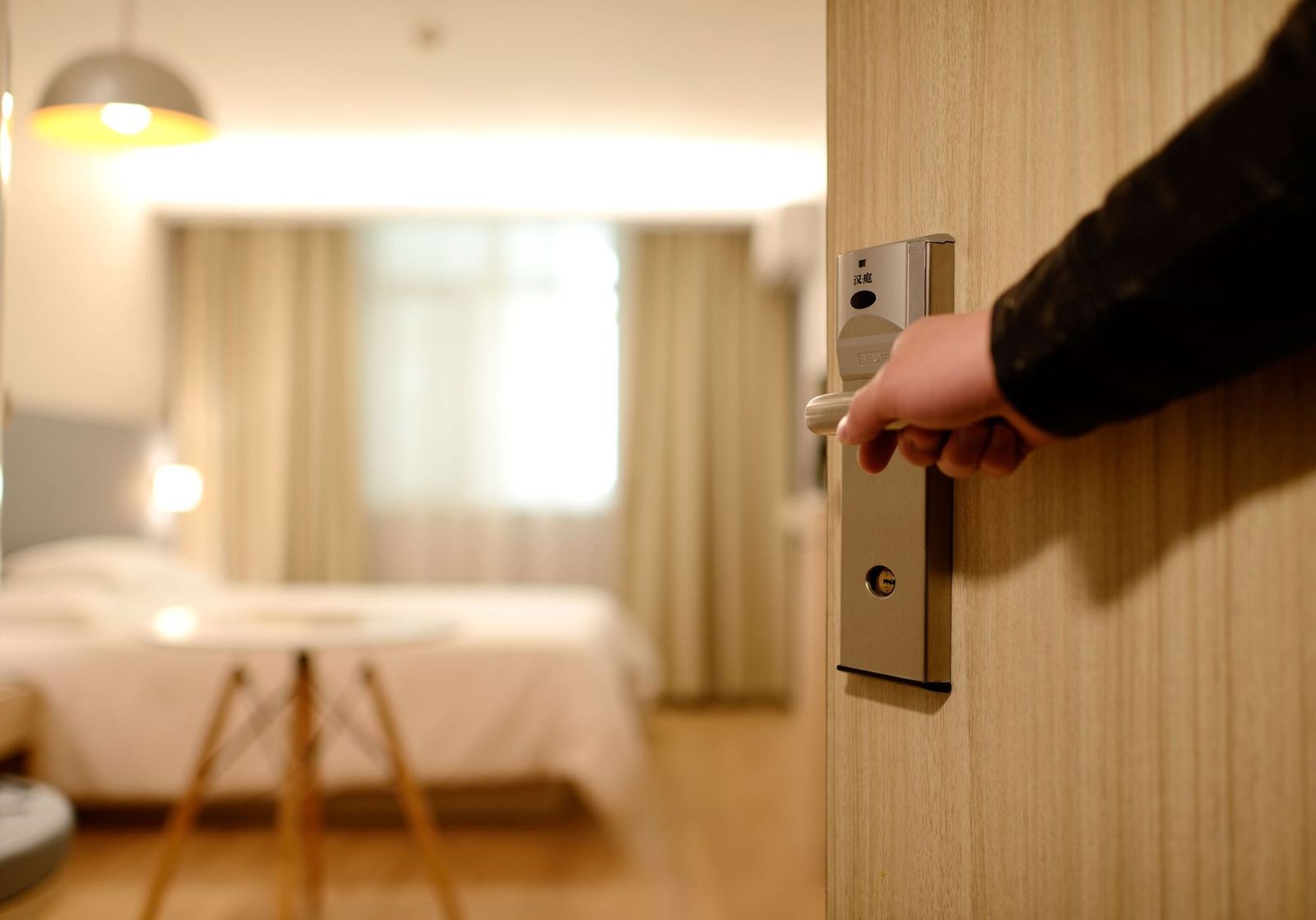
Never smoke in bed. Keep your room key and your flashlight where you can grab them quickly, since the USFA advises taking your key with you when you leave.
If a fire starts: what to do
The USFA’s life safety steps depend on where the fire is. Decide quickly, and always use the stairwell, never an elevator, because an elevator could stop at the floor of the fire.
If the fire is in your room
Get out quickly. Close the door, sound the alarm and notify the front desk.
If the fire is elsewhere in the building
Leave if it is safe to do so, and take your room key in case fire blocks your escape and you need to re-enter your room. Before you open the door, check the hallway:
- Touch the door with the back of your hand to test the temperature.
- If the door is cool, get low to the floor, brace your shoulder against it and open it slowly.
- Be ready to close it quickly if there are flames on the other side.
- Crawl low in the smoke to the nearest exit, because the freshest air is near the floor.
If your door is hot
Do not open it. Seal the door with wet towels or sheets and turn off the fan, heater and air conditioner. Then call the fire department to give your location, and signal from your window.
Where this checklist stops
This checklist covers fire and life safety, the area the USFA bulletin addresses. It does not cover every risk of a trip, so read it as one part of your planning.
If you are travelling as a family, the traveling with kids hotel tips guide covers a wider view of the stay. Before you book, you can also read about how to choose a hotel location to weigh the area around a property.
Frequently asked questions
Should I use the elevator if the fire alarm sounds?
Show answer
No. The USFA says to always use a stairwell, never an elevator, because the elevator could stop at the floor of the fire.
How do I check whether the hallway is safe?
Show answer
Use the back of your hand on the door to gauge the heat. If it feels cool, stay low and open the door slowly with your shoulder braced against it, ready to shut it again if you see flames.
What if I cannot leave my room?
Show answer
If your door is hot, do not open it. Seal it with wet towels or sheets, turn off the fan, heater and air conditioner, call the fire department with your location and signal from your window.
Should I ask a hotel about sprinklers before booking?
Show answer
Yes. The USFA’s June 2012 bulletin advises asking whether the hotel or motel has smoke alarms and an automatic fire sprinkler system when you make your reservation.